


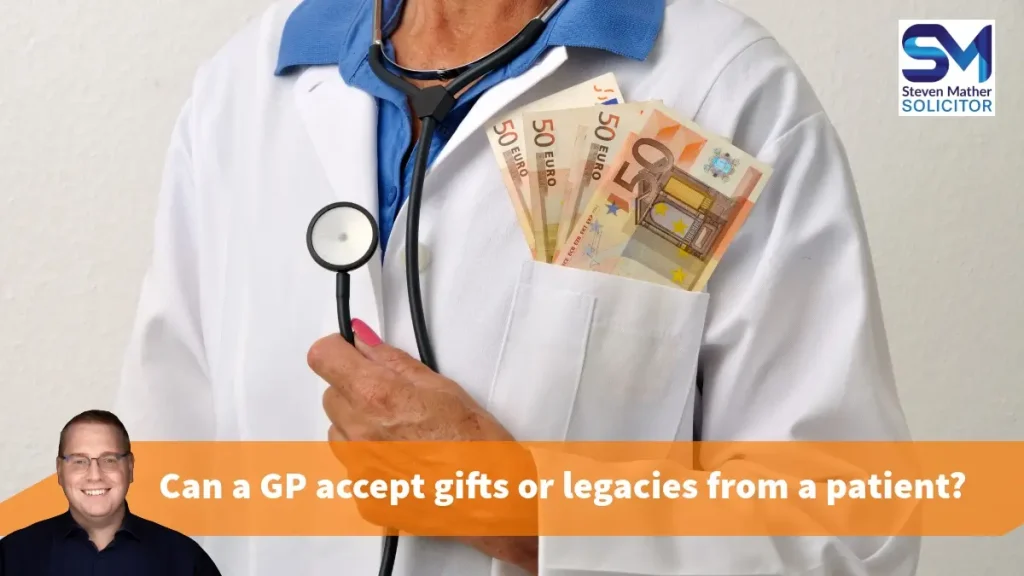
It’s not something that comes up every day, but from time to time, GP practices are offered gifts or left money in a patient’s will. A recent enquiry involved a £5,000 legacy left to a practice by a deceased patient. While well-meaning, gifts and legacies raise both legal and ethical issues for practices and individual GPs.
So, can you accept a gift? And if so, how should you go about it?
NHS contract rules on gifts
Most practices will be operating under either a GMS or PMS contract. These contain a standard clause requiring the practice to:
Keep a register of all gifts worth more than £100, whether received by the practice or by individual members of staff.
That register should be made available to NHS commissioners on reasonable request. It’s designed to promote transparency and integrity, and to help avoid situations where gifts might influence care or lead to accusations of undue influence.
Even if the gift seems harmless or is clearly a gesture of thanks, it still needs to be recorded if over £100.
The ethical dimension: what do the professional bodies say?
The BMA makes clear that ethical judgement is just as important as legal compliance. While small tokens like biscuits or a thank-you card are unlikely to cause concern, larger or unusual gifts may raise eyebrows.
Doctors are advised to consider:
-
Whether the gift might influence – or be seen to influence – care decisions
-
Whether the patient was vulnerable or lacked capacity at the time
-
How it might be perceived by others, including patients, colleagues or the press
The Medical Defence Union also advises that doctors think carefully before accepting anything of significant value, especially legacies. The General Medical Council can investigate any situation that brings a doctor’s professional judgement into question.
Legacies in wills: extra care required
Accepting a bequest in a patient’s will is not explicitly banned, but it does require caution.
The key concern here is perception. Even if the gift was freely given and there’s no suggestion of wrongdoing, would the explanation stand up to scrutiny?
The larger the legacy, the more important it becomes to assess:
-
Was the patient vulnerable or recently under your care?
-
Is there a written record of how the gift came about?
-
Would you be comfortable explaining the decision to the GMC or to a journalist?
Best practice steps when offered a gift or legacy
If your practice is offered a gift or bequest, here’s how to handle it sensibly:
-
Use the gifts register properly
If the value is over £100, it must be recorded – whether given to an individual or to the practice as a whole. Include the source, recipient, date, and nature of the gift.
-
Keep a written record of the decision
For more significant gifts (and certainly anything in a will), create a short internal note explaining:
-
Who made the decision to accept or decline
-
What considerations were taken into account
-
Any legal or professional advice received
-
-
Check the partnership agreement
Some deeds are silent on gifts and legacies, which can cause issues later. Is a legacy to one partner kept personally or shared between all? It’s worth checking the deed and, if necessary, updating it to cover this scenario.
-
Seek tax and legal advice
The gift may have tax implications, especially for the recipient. Your accountants should be consulted, and legal advice may be needed where wills or estates are involved.
-
Ask the golden question: how would this look to others?
If this legacy or gift ended up in the news, would your explanation be sound and well documented? It’s a good rule of thumb for decision-making.
Final thoughts
Gifts from patients are almost always well-intended. But the moment they exceed a certain threshold – whether financial or in terms of perception – they move into a different category. The legal rules are straightforward, but the ethical landscape is more nuanced.
When in doubt, document the reasoning, register the gift, and don’t be afraid to take advice.
If your practice is unsure about whether to accept a gift or legacy, or needs help updating your partnership deed to deal with such matters clearly, feel free to get in touch. I help healthcare businesses, like GP practices, deal with their legal issues commercially.