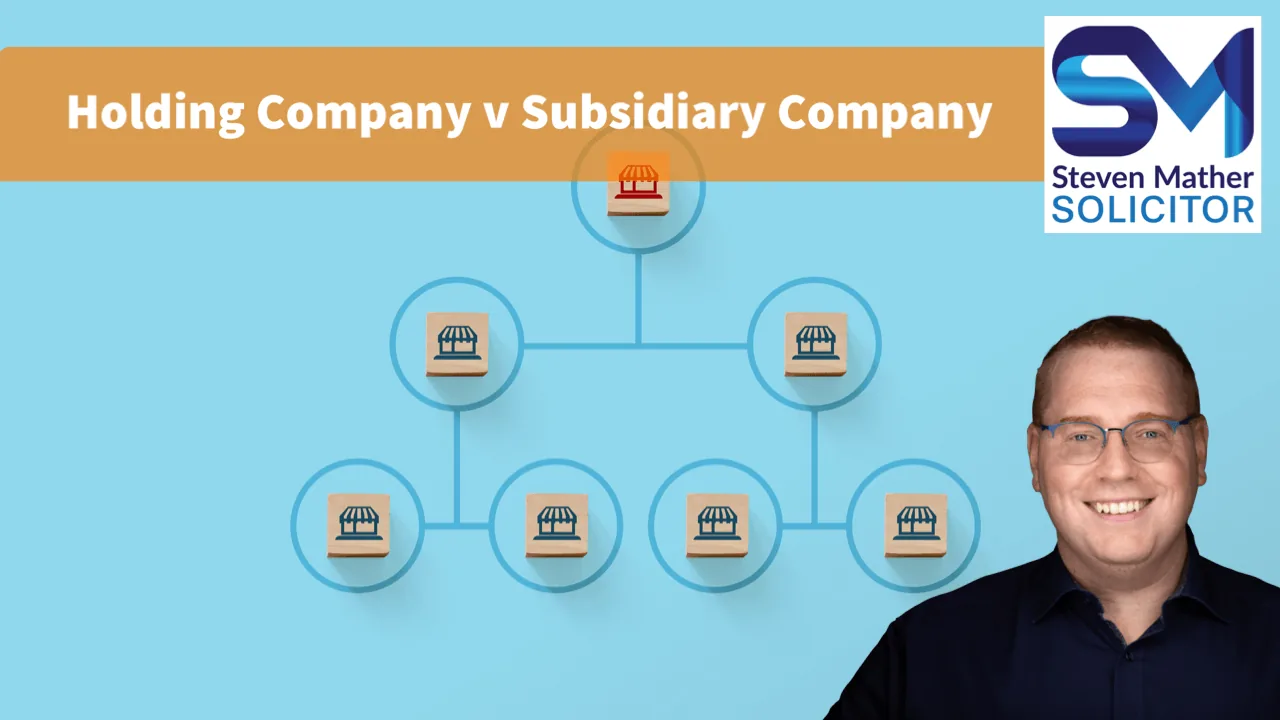
By restructuring, I mean changing how a solvent company or group is owned and organised, such as putting a holding company on top, splitting one business into two, moving the property out of the trading company, or reorganising the shares. I do the legal work on those projects for owner-managed companies across England and Wales, nearly always working alongside the owner’s accountant or tax adviser.
If the company is in financial difficulty, that’s a different kind of restructuring which I mostly don’t deal with, and I’ve explained further down who does.
Why owners reorganise
The idea usually starts with the accountant or tax adviser, who has suggested a structure that would work better. The other common reasons are wanting to keep the premises or the cash away from the risks of trading, a plan to sell part of the business and keep the rest, shareholders who want to go their separate ways, and getting the group into a shape that a buyer will recognise before a sale.
I should say that I’m a solicitor and I don’t give tax advice. Almost every reorganisation is driven or limited by tax, and that advice has to come from your accountant or another tax adviser. They work out the structure and deal with HMRC; I put it into effect legally, and help them with the facts and documents for any clearance application.
Common types of reorganisation
Inserting a holding company is the most common. A new company is put above the trading company by a share for share exchange, so that the owners hold the new company and it holds the old one. I’ve written a full guide to inserting a holding company, including what it costs.
A demerger splits a company or group so that different businesses, or different shareholders, end up in separate companies. There are several routes (a statutory demerger, a reduction of capital, or one involving a liquidator) and which one works is a tax question first. The legal side is heavier than for a holding company, as there are more documents and more that has to happen in the right order.
Moving assets around a group comes up a lot, and most often it’s getting the trading premises out of the trading company and into a holding or property company. That needs a transfer of the property, the lender’s consent if there’s a mortgage, and usually a lease back to the trading company. I do the corporate side and a Nexa property colleague handles the conveyancing.
Share reorganisations cover new classes of share, a reduction of capital, or a company buying back its own shares from someone who’s leaving. The procedure for a buyback is strict and getting it wrong can make the buyback void, which often isn’t discovered until years later.
There’s also the tidying up that is done before a sale, such as dealing with dormant subsidiaries, assets which are sitting in the wrong company and shares that were never properly issued. That overlaps with exit planning.
What the legal work involves
I start by reading what’s already there, as the articles and any shareholders’ agreement may restrict what you want to do or require consents, and bank facilities, leases and important contracts sometimes have change of control clauses which a reorganisation would trigger.
I then draft the documents, which depending on the project means share exchange or share purchase agreements, asset or business transfer agreements, board minutes and shareholder resolutions, solvency statements for a reduction of capital, new articles, and the Companies House filings and register entries that record it all. If staff move from one company to another, their employment transfers with them and there’s a process for that; for wider questions about changing terms or redundancies, see advice for employers.
Most of the risk in a reorganisation is in the detail, as a resolution that doesn’t match the agreement, or a register that nobody updated, tends not to cause any trouble until a buyer’s solicitor reads the file during a sale. This sort of company law housekeeping costs far less to get right at the time than it does to put right later.
If the company is in financial difficulty
Anything that needs an insolvency practitioner, such as an administration, a liquidation or a company voluntary arrangement, has to go to one, as that’s a licensed role and I’m not licensed.
Directors and companies who need legal advice around insolvency (their duties when the company is struggling, a threatened winding-up petition, a claim by a liquidator) are looked after by my Nexa Law colleagues Femi Ogunshakin and Alistair Haggerty. When an enquiry like that comes in I read it, decide which of them is the better fit and introduce you, and they then run the matter and quote their own fee. Sometimes I can help with the first steps myself, and I’ll say so if that’s the case. There’s more on the insolvency page and on my Nexa colleagues page. All of this work is carried out through Nexa Law Limited, which is authorised and regulated by the Solicitors Regulation Authority.
How long it takes and what it costs
I work on fixed fees, with a written scope of work agreed before I start. Most reorganisations fall somewhere between £1,000 and £7,500 plus VAT, with a simple share reorganisation at the bottom of that range. Inserting a holding company is approximately £5,000 to £8,000 plus VAT. A demerger can cost more, and I’ll quote once I’ve seen the structure your tax adviser has in mind.
The timing mostly depends on other people, which means HMRC if clearance is being sought, a lender if its consent is needed, and your accountant’s own timetable. The legal documents can usually be prepared while those are pending.
Next steps
If your accountant has suggested a change of structure, or you think you need one, send me the details. A group structure chart and any note from your tax adviser are the most useful things to include.