Case Study: Trade Mark Opposition - Prolox v ProLocks
Steven Mather Solicitor was recently instructed in respect of a Trade Mark Opposition that a client had received. Here’s the background, what happened and…
Read it
Disputes
Someone copying your brand, or a letter of claim on your desk? Contentious intellectual property work is handled by my Nexa colleague Abby Minns.
If someone is using your brand, your content or your designs without permission, or you’ve received a letter accusing you of doing that to them, you’re in an intellectual property dispute. I don’t act on these any more, and disputed IP work is dealt with by my colleague Abby Minns at Nexa Law. If you send me the details I’ll introduce you, and Abby will then act for you and quote her own fee. There’s more about how I work with Nexa colleagues.
Trade mark infringement is the most common. The Trade Marks Act 1994 (section 10) covers use of an identical or similar sign for identical or similar goods or services where the public is likely to be confused, and gives wider protection to marks with a reputation.
Passing off protects a brand that isn’t registered. You have to show goodwill in the name or get-up, a misrepresentation by the other business that confuses the public, and damage as a result. It’s harder and more expensive to prove than infringement of a registered mark, which is a good reason to register your trade mark early.
Copyright disputes tend to involve website text, photographs, software and marketing material which someone else has copied, and the sums can be bigger than people expect, as my note on Tipping v Smith shows.
Then there are trade mark oppositions at the Intellectual Property Office. Once an application is published there’s a two-month window to oppose it, which can be extended to three months by filing a notice of threatened opposition (form TM7A) within the first two, as the IPO’s guidance explains. That deadline can’t be extended any further, so it’s important not to miss it.
A letter of claim shouldn’t be ignored, but it’s also worth getting it looked at before you reply. If you admit something, or sign the undertakings enclosed with the letter because they look like the quickest way of ending the matter, you can commit yourself to more than the claim was worth. Equally, a letter which threatens trade mark proceedings without good grounds can itself be actionable.
I still do the non-contentious side, which is registering trade marks and dealing with intellectual property ownership, assignments and licences, so that it’s clear who owns what before there is any argument about it.
Send me the details, with the letter you’ve received or examples of the copying, your trade mark registration number if you have one, and any deadline, and I’ll pass it to Abby.
Also in this section
Related writing
Steven Mather Solicitor was recently instructed in respect of a Trade Mark Opposition that a client had received. Here’s the background, what happened and…
Read it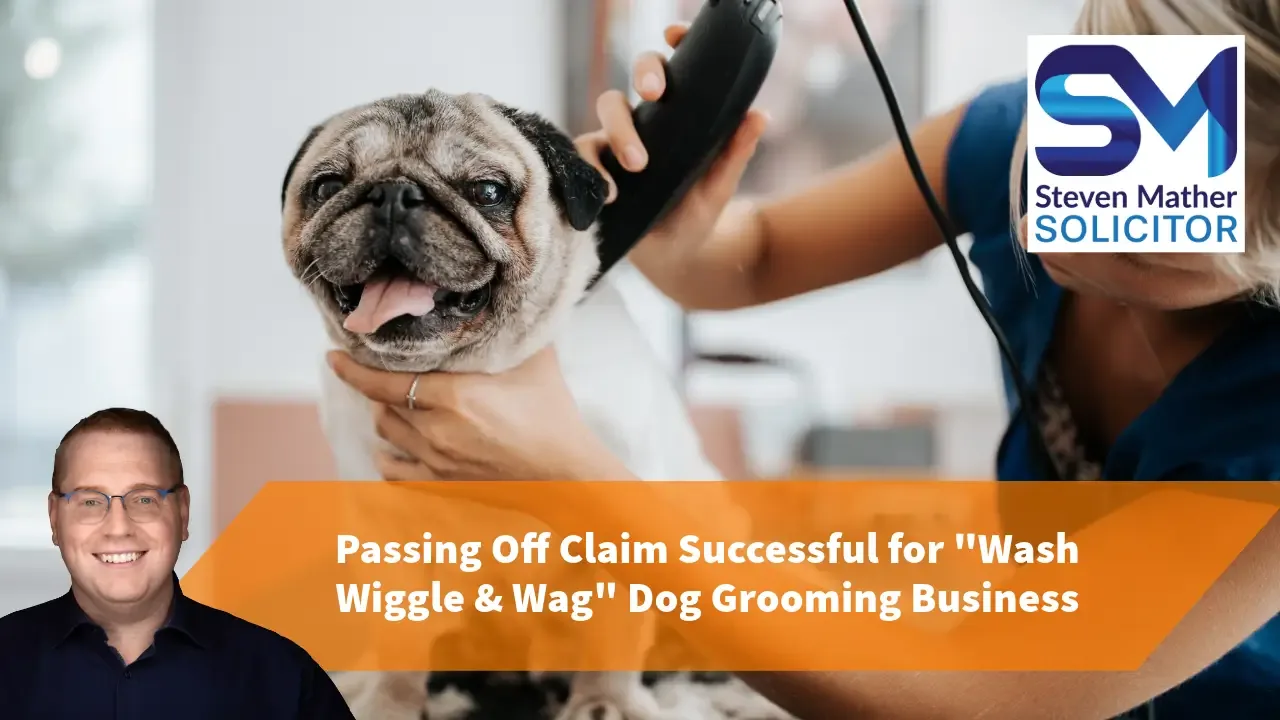
Trading as Wash Wiggle and Wag amounted to passing off.
Read it
A car event organiser paid £134,666 for reposting magazine photographs on Facebook and Instagram. What Tipping v Smith teaches small business owners about image copyright.
Read itSwipe for more
Drop me a line
I’ll give you a steer and tell you whether I’m the right person for the job. If I’m not, I’ll say so and point you at someone who is.
StevenAI answers from this website. It gives general information rather than legal advice on your situation, and using it does not make me your solicitor.