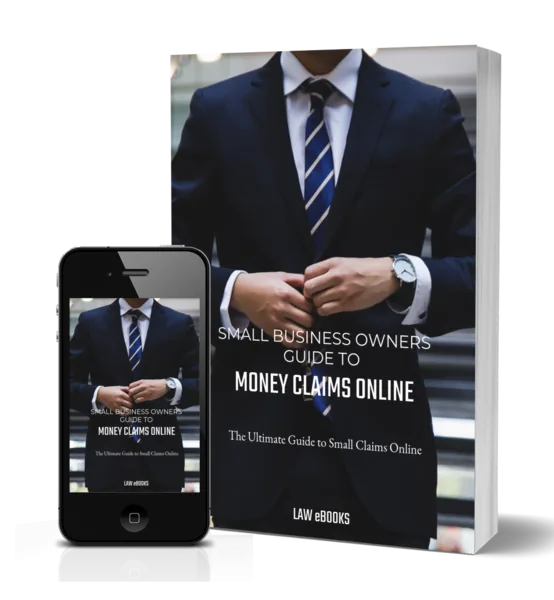
Business disputes - small claims guide
Resolving business disputes efficiently is crucial for two things: maintaining smooth operations and protecting your financial interests . The small…
Read it
Disputes
Property Ownership Disputes Solicitor in Leicester Joint Owners / Co-Owner Disputes TOLATA Claims Gifts for property…
I am an expert in Property Ownership Disputes or Co-ownership Disputes. I have dealt with a considerable number of disputes involving the ownership or claimed ownership of property, and every time I strive to provide:
Urgent Property Ownership Advice?
Do you have an urgent property ownership matter?
Call us now for an appointment or book online. I can usually see you within 24 hours.
A dispute can arise over who owns a property, and co-ownership disputes have been seen more regularly by the Courts in the last few years, as the rise of unmarried couples and cohabitees is seen.
Who owns the house?
Many couples buy a house together, often in equal shares, but occasionally one person might pay the deposit, or the other person since they do not work, may not pay the mortgage (for example). Everything is fine, until the couple splits and then the question can be asked - who owns the property and in what proportion. Is it 50/50 or some other share.
If there is a written Deed which sets out the percentages, then there is very little you can do to argue otherwise.
However, if there is no written Deed, then the Court will have to consider all of the circumstances to arrive at their conclusion. These factors include:
Property Ownership disputes are often governed by legislation known as The Trusts of Land and Appointment of Trustees Act 1996 . Lawyers shorten this to TOLATA.
The Act, TOLATA, provides for the power to sell a property or to force the other co-owner to purchase your shares, along with the right of the Court to determine the ownership shares.
So, if one party does not wish to sell then we can make an application to Court (a TOLATA Claim) to seek an Order for Sale.
Once we have the Order for Sale, we can then arrange for the property to be sold in accordance with the agreed or decided share ownership (after repaying the mortgage and any secured loans).
If a co-owner of the Property dies, and does not leave a Will or did not provide for the other party to inherit the deceased's share, then that share will pass in accordance with the Deceased's estate.
If the Property was held as Joint Tenants, then the Property will automatically pass to the other co-owner without any action.
However, if it was held as Tenants in Common (that is with a specific share of ownership) then the share will pass to their Estate.
In practice, this can sometimes mean that the Co-Owner and, say, step-children (Children of the Deceased) can be involved in dispute over the property.
On death of a co-owner, there are a few practical options:
It is true to say that the estate could force the sale of the property, by way of a TOLATA claim as referred to above.
As a property ownership solicitor I have dealt with many cases like this. There are two important legal phrases that you may come across - Resulting Trust and Constructive Trust.
They are very similar in nature, and effectively is where Property is held on trust (on behalf) of a third party.
So, for example, if you gave 50% of the purchase price of a property to buy with your Son & Daughter in Law, with a view to move in together, but the Property was only in their names, then it is likely to be argued that you have what is called a beneficial share in the property - that your share is held on trust for you by them.
Trusts and Equity Law in relation to property ownership disputes is complicated, and so you do really need a specialist solicitor that understands this area of law, and who has experience of property ownership disputes. I do!
Steven Mather is a very experienced with co-ownership disputes. I have over 11 years experience in property ownership disputes.
I can help you from start to finish. General steps in a property ownership dispute might include:
Here's a sample of the kinds of property ownership disputes I've dealt with recently:
There is quite a wide range in costs, as it depends on the value, complexity and other party's actions. The following costs are estimates only, and do not include disbursements such as Court Fees, Experts or Barristers costs. You will be given a bespoke estimate or fixed fee when we discuss your case.
I suggest that the first step is a review and advice meeting with me Steven Mather Solicitor. The charge is a fixed fee of £350 plus VAT for this or £500 plus VAT to include a letter to another party following the initial advice.
After that, as a rough guide, a property ownership dispute seek a Court Order for Sale of the Property, could cost somewhere between £4000-£8000 plus VAT and disbursements. If the matter is hotly disputed and contested, then these fees are likely to be a lot more.
I will recommend early mediation where possible, in order to save time and costs.
If you're unsure on the question of fees, or on any aspect of property ownership disputes then speak to our litigation solicitor Steven Mather.
Just fill in the form on the side of this page, or give us a call to discuss further.
To instruct a property ownership dispute solicitor, contact us now.
Related writing
Resolving business disputes efficiently is crucial for two things: maintaining smooth operations and protecting your financial interests . The small…
Read it
Unpaid invoices. The term is something all business owners have experienced at some point. But it doesn't make it less unsettling and frustrating. There…
Read it
If handled badly, business contract disputes can be costly and time-consuming. Avoid this by reading this guide to maintain your business relationships and reputation.
Read itSwipe for more
Drop me a line
I’ll give you a steer and tell you whether I’m the right person for the job. If I’m not, I’ll say so and point you at someone who is.
StevenAI answers from this website. It gives general information rather than legal advice on your situation, and using it does not make me your solicitor.